

In the realm of medical device design, display technology plays a pivotal role in ensuring accurate data visualization and seamless user interaction. As a trusted supplier of 192x64 COG (Chip on Glass) LCDs, I often encounter inquiries regarding the suitability of our displays for medical applications. In this blog post, I'll delve into the technical aspects, regulatory considerations, and real - world applications to answer the question: Can a 192x64 COG LCD be used in medical devices?
Technical Features of 192x64 COG LCDs
First, let's understand the core technical features of 192x64 COG LCDs. The "192x64" refers to the display's resolution, which means it can present 192 pixels horizontally and 64 pixels vertically. This resolution offers a good balance between providing sufficient detail for data presentation and keeping the display compact.
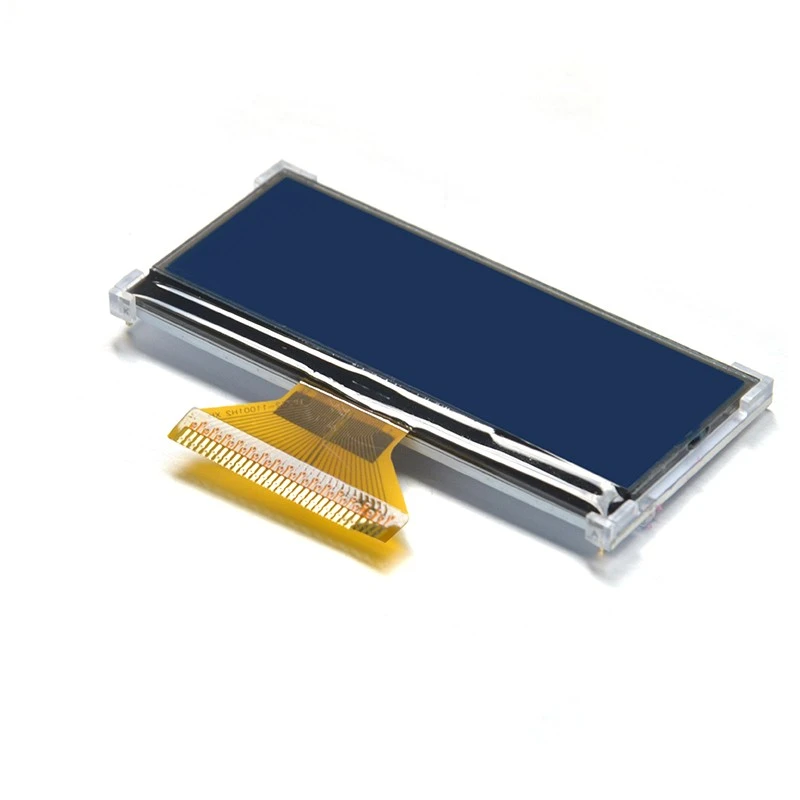
The COG technology, where the integrated circuit is directly mounted on the glass substrate of the LCD, brings several advantages. It reduces the overall size of the display module, making it suitable for devices where space is at a premium. Additionally, COG technology enhances electrical performance by minimizing the length of interconnects, which in turn reduces signal interference and power consumption.
In medical devices, these features can be highly beneficial. For example, in portable medical monitors, the compact size of the 192x64 COG LCD allows for a smaller and more lightweight device, which is convenient for both medical staff and patients. The low power consumption also extends the battery life of these portable devices, ensuring continuous operation during critical monitoring.
Visualization Requirements in Medical Devices
Medical devices often need to display a variety of information, including vital signs such as heart rate, blood pressure, and oxygen saturation, as well as graphical representations of electrocardiograms (ECGs) or other waveforms. The 192x64 COG LCD can meet many of these visualization needs.
With its 192x64 pixel matrix, it can clearly display numerical values of vital signs in a legible font size. For example, a large, bold number for the heart rate can be easily presented on the display, allowing medical personnel to quickly assess the patient's condition. Moreover, it can also display simple waveforms. Although the resolution may not be as high as some larger - sized displays, it can still provide a basic representation of ECG or other physiological waveforms, enabling a general analysis of the patient's cardiac or other bodily functions.
In comparison to other common LCD displays in the market, such as the 128x32 lcd display and the 122x32 graphic lcd, the 192x64 COG LCD offers a higher resolution, which means more detailed and accurate information can be presented. However, for more complex medical imaging applications, a higher - resolution display like the 128x128 lcd display may be required.
Regulatory Considerations
When it comes to using LCDs in medical devices, regulatory compliance is of utmost importance. Medical devices are subject to strict regulations to ensure patient safety and product effectiveness. In the United States, the Food and Drug Administration (FDA) regulates medical devices, and in the European Union, the Medical Device Regulation (MDR) sets the standards.
Our 192x64 COG LCDs are designed and manufactured with these regulations in mind. We follow strict quality control processes to ensure that the displays meet the necessary electrical safety, electromagnetic compatibility (EMC), and environmental requirements. For example, the displays are tested to ensure that they do not emit excessive electromagnetic interference that could affect other medical equipment in the vicinity.
We also provide all the necessary documentation and support to help our customers meet the regulatory requirements for their medical devices. This includes technical specifications, test reports, and compliance certificates. However, it's important to note that the final responsibility for regulatory compliance of the medical device lies with the device manufacturer.
Real - World Applications
There are several real - world applications where 192x64 COG LCDs can be effectively used in medical devices.
One such application is in home medical monitoring devices. For example, a home blood pressure monitor can use a 192x64 COG LCD to display the measured blood pressure values, along with additional information such as the date and time of the measurement. The compact size of the display makes the device easy to use at home, and the clear visualization of data helps patients and their caregivers to keep track of their health status.
Another application is in some types of portable diagnostic devices. For instance, a handheld glucometer can utilize the 192x64 COG LCD to show the blood glucose level, as well as provide some basic guidance or warnings based on the measured value. The low power consumption of the display is especially important in these battery - powered devices, as it ensures long - term operation without frequent battery replacements.
Challenges and Limitations
While 192x64 COG LCDs have many advantages for medical device applications, there are also some challenges and limitations.
One of the main limitations is the relatively low resolution compared to larger, high - end medical displays. For applications that require detailed medical imaging, such as high - resolution X - ray or MRI image viewing, the 192x64 COG LCD is not suitable. The limited number of pixels may not be able to display the fine details of these complex images accurately.
Another challenge is the color display capability. Most 192x64 COG LCDs are monochrome, which means they can only display information in one color (usually black and white). In some medical applications, color - coded information can be very useful for quick and easy interpretation. For example, in a multi - parameter medical monitor, different colors can be used to represent different vital signs or alarm levels. However, our R & D team is constantly working on improving the color display technology for our COG LCDs to address this issue.
Conclusion
In conclusion, a 192x64 COG LCD can indeed be used in many medical devices. Its technical features, such as compact size, low power consumption, and sufficient resolution for basic data visualization, make it a suitable choice for a variety of medical applications, especially in portable and home - use devices.
However, it's important to carefully evaluate the specific requirements of each medical device application. For more complex imaging or color - based visualization needs, other display technologies may be more appropriate.
If you are a medical device manufacturer looking for a reliable and cost - effective display solution for your products, our 192x64 COG LCDs could be the answer. We have a wealth of experience in supplying high - quality LCDs to the medical industry, and our dedicated support team can work with you to ensure that our displays meet your specific requirements. Contact us to start a procurement discussion and find out how our 192x64 COG LCDs can enhance your medical devices.

References
- "Medical Device Regulations in the United States", U.S. Food and Drug Administration
- "Medical Device Regulation (MDR) in the European Union", European Commission
- "LCD Technology and Applications", Display Industry Research Reports