

Hey there! As a supplier of 7 segment LEDs, I often get asked about the IP rating of these nifty little devices. So, I thought I'd take a few minutes to break it down for you.
First off, let's talk about what an IP rating actually is. IP stands for Ingress Protection, and it's a standard that tells you how well a product is protected against the intrusion of solid objects (like dust) and liquids (like water). The IP rating is made up of two digits, and each digit represents a different level of protection.
The first digit in the IP rating refers to protection against solid objects. It can range from 0 (no protection) to 6 (complete protection against dust). Here's a quick breakdown:
- 0: No protection against solid objects.
- 1: Protection against objects larger than 50mm (like a hand).
- 2: Protection against objects larger than 12mm (like a finger).
- 3: Protection against objects larger than 2.5mm (like a tool).
- 4: Protection against objects larger than 1mm (like a wire).
- 5: Dust - protected. Limited ingress of dust is permitted, but it won't affect the operation of the device.
- 6: Dust - tight. No dust can enter the device.
The second digit in the IP rating refers to protection against liquids. It can range from 0 (no protection) to 9 (protected against high - pressure, high - temperature water jets). Here's what each digit means:

- 0: No protection against liquids.
- 1: Protection against vertically falling drops of water.
- 2: Protection against vertically falling drops of water when the device is tilted up to 15 degrees from the vertical.
- 3: Protection against spraying water at an angle up to 60 degrees from the vertical.
- 4: Protection against splashing water from any direction.
- 5: Protection against water jets from any direction.
- 6: Protection against powerful water jets or heavy seas.
- 7: Protection against temporary immersion in water (up to 1m for 30 minutes).
- 8: Protection against continuous immersion in water under specified conditions.
- 9: Protection against high - pressure, high - temperature water jets typically used for cleaning vehicles.
Now, let's get to the point. What's the IP rating of a 7 segment LED? Well, it depends on the specific model and how it's designed and manufactured.
Some basic 7 segment LEDs that are used in typical indoor applications, like on circuit boards in consumer electronics, might not have a high IP rating. They're usually more focused on functionality and cost - effectiveness. These might have an IP rating like IP00 (no protection against solids or liquids), which is fine for a controlled indoor environment where there's no risk of dust or water exposure.
On the other hand, if you're looking for 7 segment LEDs that can withstand harsh environments, you'll want ones with a higher IP rating. For example, in industrial settings, outdoor displays, or automotive applications, you need LEDs that can handle dust, water, and other environmental factors.
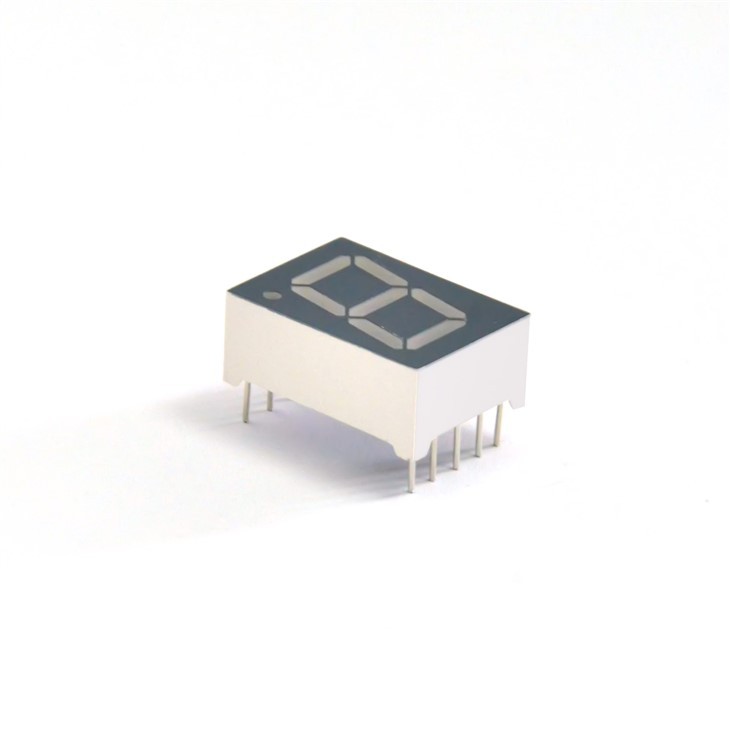
We offer a variety of 7 segment LEDs with different IP ratings to suit your needs. If you're interested in single - digit displays, check out our One - digit 7 Segment LED. These are great for simple indicator applications, and we can provide options with decent IP ratings for more demanding environments.
For applications where you need more digits, we have Three - digit 7 Segment LED and Four - digit 7 Segment LED displays. These are often used in digital clocks, counters, and measurement devices. Depending on the model you choose, you can get IP ratings that offer protection against dust and water, ensuring reliable operation even in tough conditions.
When choosing a 7 segment LED with the right IP rating, you need to consider the environment where it'll be used. If it's going to be in a clean, dry indoor area, a lower IP rating might be sufficient. But if it's going to be exposed to dust, moisture, or even direct contact with water, you'll want a higher IP rating.
Let's say you're using the LEDs in a vending machine. The machine is usually indoors, but there might be some risk of spills or dust accumulation. In this case, an IP rating of at least IP32 would be a good idea. This would protect the LEDs from small tools (like screwdrivers that might accidentally come close during maintenance) and vertically falling drops or splashes of water.
If you're using the LEDs in an automotive dash, where they need to withstand vibrations, temperature changes, and exposure to moisture, you'd want an even higher IP rating, like IP67. This would ensure that the LEDs are completely dust - tight and can handle temporary immersion in water, making them reliable in all kinds of driving conditions.
At our company, we understand that different customers have different requirements. That's why we offer a wide range of 7 segment LEDs with various IP ratings. Whether you're a small electronics hobbyist working on a DIY project or a large - scale industrial manufacturer, we can help you find the right product.
If you're not sure which IP rating is best for your application, don't worry! Our team of experts is here to help. We can answer your questions, provide technical advice, and recommend the most suitable 7 segment LED for your needs.
So, if you're in the market for 7 segment LEDs, and you need to consider the IP rating, get in touch with us. We're ready to have a chat about your project and see how we can assist you with high - quality, reliable 7 segment LEDs.
Reference
- Electrical and Electronics Engineers' Handbook on Ingress Protection Ratings