

As a supplier of One-digit 7 Segment LEDs, I often encounter inquiries regarding the electrostatic discharge (ESD) resistance of these components. ESD is a common concern in the electronics industry, as it can cause significant damage to sensitive electronic devices. Understanding the ESD resistance of One-digit 7 Segment LEDs is crucial for ensuring their reliability and performance in various applications.
What is Electrostatic Discharge?
Electrostatic discharge refers to the sudden flow of electricity between two electrically charged objects caused by contact, an electrical short, or dielectric breakdown. In the context of electronics, ESD can occur when a charged object, such as a human body or a piece of equipment, comes into contact with an electronic component. The discharge can generate a high-voltage pulse that may damage the component's internal circuitry.
Importance of ESD Resistance in One-digit 7 Segment LEDs
One-digit 7 Segment LEDs are widely used in a variety of applications, including digital displays, calculators, watches, and industrial control panels. These applications often involve human interaction, which increases the risk of ESD events. If a One-digit 7 Segment LED is not adequately protected against ESD, it may experience malfunctions, reduced lifespan, or even permanent damage.
Factors Affecting ESD Resistance
The ESD resistance of a One-digit 7 Segment LED is influenced by several factors, including the manufacturing process, the materials used, and the design of the component.

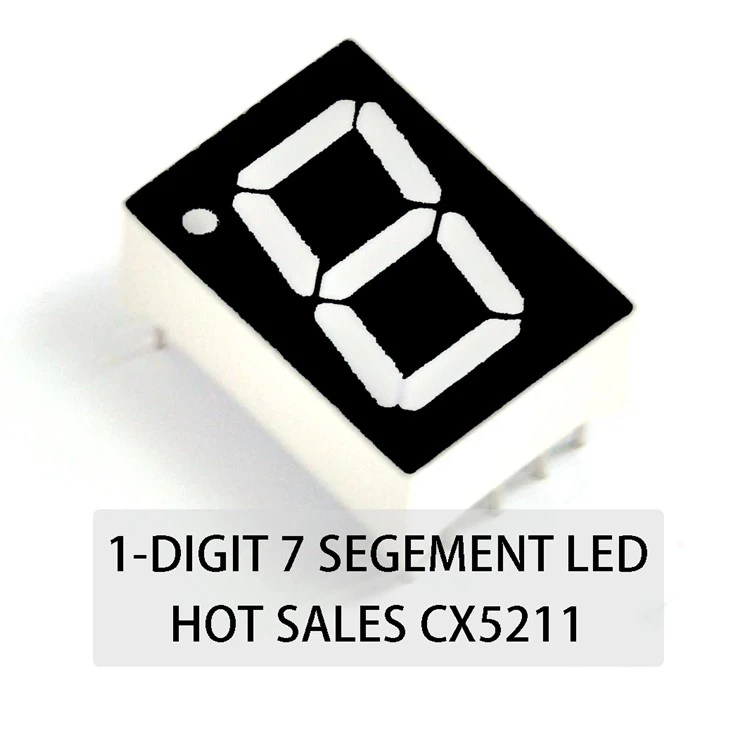
Manufacturing Process
The manufacturing process plays a crucial role in determining the ESD resistance of a One-digit 7 Segment LED. High-quality manufacturing processes, such as proper encapsulation and bonding techniques, can help protect the internal circuitry from ESD damage. Additionally, manufacturers may incorporate ESD protection devices, such as transient voltage suppressors (TVS) or Zener diodes, into the LED package to divert the ESD current away from the sensitive components.
Materials Used
The materials used in the construction of a One-digit 7 Segment LED can also affect its ESD resistance. For example, the type of semiconductor material used in the LED die can impact its ability to withstand ESD events. Some semiconductor materials are more resistant to ESD than others, and manufacturers may choose materials with higher ESD tolerance to improve the overall reliability of the LED.
Design of the Component
The design of the One-digit 7 Segment LED can also influence its ESD resistance. Components with a more robust design, such as those with thicker traces and larger bonding pads, are generally more resistant to ESD damage. Additionally, the layout of the internal circuitry can affect the ESD performance of the LED. For example, proper grounding and shielding techniques can help reduce the risk of ESD-induced damage.
Measuring ESD Resistance
The ESD resistance of a One-digit 7 Segment LED is typically measured using industry-standard test methods, such as the Human Body Model (HBM) and the Machine Model (MM). These tests simulate the ESD events that may occur during normal handling and operation of the component.
Human Body Model (HBM)
The HBM is the most common method for testing the ESD resistance of electronic components. It simulates the discharge of static electricity from a human body to the component. In the HBM test, a charged capacitor is discharged through the component using a specific test circuit. The component is then evaluated to determine if it has been damaged by the ESD event.
Machine Model (MM)
The MM is another test method used to measure the ESD resistance of electronic components. It simulates the discharge of static electricity from a machine or equipment to the component. The MM test is typically more severe than the HBM test, as machines can generate higher levels of ESD.
Typical ESD Resistance Values for One-digit 7 Segment LEDs
The ESD resistance of One-digit 7 Segment LEDs can vary depending on the specific model and manufacturer. However, most high-quality One-digit 7 Segment LEDs have an HBM ESD tolerance of at least ±2000V. Some advanced models may have an HBM ESD tolerance of up to ±8000V, providing increased protection against ESD events.
Applications Requiring High ESD Resistance
In applications where the One-digit 7 Segment LED is likely to be exposed to high levels of ESD, such as in industrial environments or in products that are frequently handled by humans, it is essential to choose a component with high ESD resistance. For example, in industrial control panels, where the LED may be exposed to ESD from nearby equipment or operators, a high-ESD-resistant LED can help ensure the reliability and longevity of the display.
Our One-digit 7 Segment LEDs and ESD Resistance
As a leading supplier of One-digit 7 Segment LEDs, we understand the importance of ESD resistance in ensuring the performance and reliability of our products. Our One-digit 7 Segment LEDs are designed and manufactured using advanced techniques and high-quality materials to provide excellent ESD protection. We offer a range of models with different ESD tolerance levels to meet the specific requirements of our customers.
In addition to our One-digit 7 Segment LEDs, we also provide Three-digit 7 Segment LED and Four-digit 7 Segment LED solutions. These multi-digit LEDs are also designed with ESD protection in mind, ensuring reliable operation in various applications.
Conclusion
In conclusion, the ESD resistance of a One-digit 7 Segment LED is a critical factor that affects its reliability and performance. By understanding the factors that influence ESD resistance, measuring it using industry-standard test methods, and choosing components with appropriate ESD tolerance levels, you can ensure the long-term reliability of your electronic products.
If you are interested in purchasing One-digit 7 Segment LEDs or other related products, we invite you to visit our website at One-digit 7 Segment LED to explore our product range. Our team of experts is also available to assist you with any technical questions or to discuss your specific requirements. Contact us today to start a procurement discussion and find the best LED solutions for your applications.
References
- "Electrostatic Discharge (ESD) in Electronics," IEEE Transactions on Electromagnetic Compatibility.
- "ESD Protection in Semiconductor Devices," Semiconductor Industry Association.
- "Testing and Characterization of Electrostatic Discharge Immunity," International Electrotechnical Commission (IEC) standards.