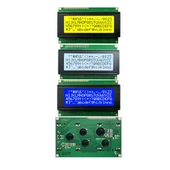
In the early stage of our toad skin development, many development engineers will seriously confirm with us whether the customized LCD screen can adapt to extreme weather, such as minus 30 degrees Celsius outdoors in Canada and the extreme heat of the Sahara Desert. Next, we will introduce what should be done in product development.
1. Choose the right LCD technology
Use a wide temperature range LCD: Choose an LCD screen designed for extreme temperatures, which usually has better temperature adaptability.
Use VA or IPS technology: These technologies usually perform more stably under temperature changes.
2. Optimize materials
Use high and low temperature stable materials: Choose high and low temperature resistant liquid crystal materials and substrates to improve the temperature resistance of the screen.
Improve packaging materials: Use better packaging materials to prevent the impact of temperature changes on internal components.
3. Temperature compensation circuit
Integrate temperature sensor: Integrate temperature sensor in LCD screen to monitor temperature changes in real time and adjust display parameters according to temperature.
Use temperature compensation algorithm: Develop software algorithm to automatically adjust the brightness and contrast of the screen according to ambient temperature.
4. Improve heat dissipation design
Optimize heat dissipation structure: Design a good heat dissipation structure to ensure that the LCD screen can effectively dissipate heat in a high temperature environment.
Use heat dissipation materials: Use thermal conductive materials around the screen to help dissipate heat.
5. Heating and cooling system
Integrated heating elements: In low temperature environments, heating elements can be integrated to keep the LCD screen within the operating temperature range.
Use cooling system: In high temperature environments, you can consider using an active cooling system such as a fan or liquid cooling system.
6. Environmental protection
Protective housing: Design a protective housing to protect the LCD screen from extreme temperatures and other environmental factors.
Sealed design: Use a sealed design to prevent moisture and dust from entering the inside of the screen and affecting performance.
7. Testing and verification
Conduct environmental testing: Conduct extreme temperature tests during the product development stage to verify the performance of the LCD screen at different temperatures.
Collect feedback: Collect user feedback in actual use and continuously improve the design.
Of course, our answers may still be imperfect in unknown areas. If you have more good ideas for solving product development under extreme temperature conditions, please contact us. Communication is the best way to learn and progress!