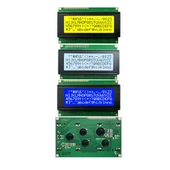
The structure of TFT LCD
TFT LCD (thin film transistor liquid crystal display) is mainly composed of backlight + polarizer + liquid crystal layer + thin film transistor + color filter + glass substrate + driving circuit. Each part of it has a unique function, and through mutual cooperation, high-quality image display can be achieved. The molecular arrangement in the liquid crystal layer is controlled by electrodes, and the color display is controlled by the cooperation of filters. So what are the functions of each component?
1. Backlight is a common light source
Commonly used are LED backlight (with LED lamp beads) and light guide plate (LED lamp beads designed on PCB board). Its function is to provide the required light source to illuminate the display screen. It can be used in special environments.
2. Polarizer
Front polarizer: located in front of the display, it can make light propagate in a specific direction.
Rear polarizer: located behind the liquid crystal layer, the working principle is to control the passage of light in the liquid crystal layer.
3. Liquid crystal layer
Liquid crystal molecules: between two glass substrates, liquid crystal molecules can change their arrangement state under the action of electric field.
Interlayer distance: Usually a special polymer material (such as polyimide) maintains a certain spacing.
4. Thin Film Transistor (TFT)
Function: Each pixel is usually controlled by a thin film transistor (TFT). TFT is responsible for adjusting the voltage, thereby affecting the arrangement of liquid crystal molecules, so that each pixel displays different colors and brightness.
Structure: TFT is usually made of silicon material and integrated into a glass substrate to form a circuit.
5. Color filter
RGB filter: There are three color filters of red, green and blue on both sides of the liquid crystal layer, which allow the corresponding color of light to pass through to produce the desired color.
Arrangement: The color filter adheres to the liquid crystal layer in a specific pattern (such as diagonal arrangement) to achieve a colorful display effect.
6. Glass substrate
Front substrate: Located in front of the liquid crystal display, usually with transparent electrodes (such as indium tin oxide, ITO) to form electrodes.
Rear substrate: Located behind the liquid crystal display, with built-in TFT circuit and drive circuit.
7. Drive circuit
Function: Control and drive TFT to work, and transmit signals to the liquid crystal layer to produce images.
Location: Usually embedded in the rear substrate and combined with TFT.
Each component of tftLCD can output multi-color and delicate picture quality through mutual cooperation, making data visualization clearer and more intuitive. Do you understand its components?